


Where the river shapes the wine
Header image: © Dominik Ketz / TBEN
On the steep slopes of the Lahn grows a wine that doesn't hide where it comes from. Slate, sun and the closeness to the water give it its character. Every glass tells of the patience it takes to grow something good here.

Wine that tells of slate and river
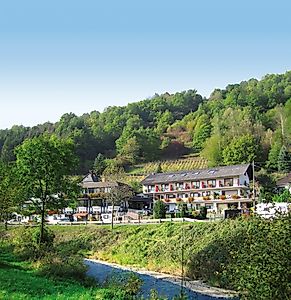
Between Obernhof and Weinähr lies one of the smallest and most extraordinary wine-growing regions in Germany. Burgundian monks planted the first vines here, laying the foundation for a wine tradition that is still alive today. Sunny steep slopes, slate soils and the special climate of the Lahn Valley produce wines with real character. Anyone who drinks a glass here tastes the landscape.

The wineries that shape the character
Three dedicated winegrowers preserve this special cultural heritage with passion. Their estates have been run by the same families for generations. The plots are small, the paths between vineyard and cellar are short, and the signature of each estate is clearly noticeable. A visit is worthwhile not only for the wine itself, but for the people who make it.

Wine and community
What began with restoring old vineyard areas, repairing historic dry-stone walls and creating new planting areas grew into a special future project for Lahn wine. In spring 2020 it led to the Bürgerweinberg Obernhof/Weinähr, a community vineyard that gives wine lovers the chance to become part of the wine tradition themselves, on the site of the former vine nursery of Geisenheim University in Obernhof and on an area belonging to the Massengeil-Beck winery in Weinähr. So it isn't just new vines that grow here, but also community, togetherness and enthusiasm for winegrowing on the Lahn.

Wein.Berg.Fest A festival for all the senses
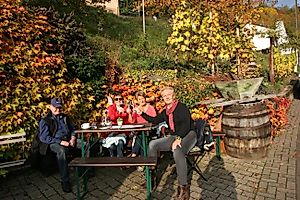
At the annual Wein.Berg.Fest in early June, everything revolves around Lahn wine and the special wine culture of our region. Amid the idyllic vineyards you can enjoy regional wines, experience the unique landscape and spend sociable hours in a special atmosphere. A wonderful experience that brings together wine, nature and joie de vivre on the Lahn!
Stop in and enjoy Lahn wine
You might also like
 Photo: Dominik Ketz / RPT
 Photo: Dominik Ketz / TBEN
Good to know
You're planning a stay or would like to find out more about the region? Here you'll find answers to frequently asked questions about the Bad Ems-Nassau region and the Lahn Valley.
Which grape varieties are grown on the Lahn?
The Lahn belongs to the Mittelrhein wine region, although Lahn wine is often seen as having a character of its own within it. Riesling dominates and develops its typical minerality on the slate soils. There are also smaller amounts of other grape varieties, which the winegrowers usually make in modest quantities for enthusiasts and connoisseurs.
Where can I try or buy Lahn wine?
Most wineries along the Lahn sell directly from the estate and offer their own tastings. Lahn wine is also usually on the menu in the region's restaurants and wine taverns. If you'd like to visit several wineries in one day, it's best to plan ahead, as not every estate is open all day.
When is the best time to visit the vineyards?
From spring to autumn the vineyards show their most beautiful side: in spring with their fresh green, in autumn at harvest with the colours of the leaves and the bustle of the grape picking. If you prefer it quieter, come on a weekday outside the harvest season.
Are there guided wine tastings in the region?
Yes, several wineries offer guided tastings, some with a look at the cellar and vineyard, some combined with small dishes. Booking in advance is recommended, as group sizes are usually limited. You can find details of individual providers in the overview of wineries.
What sets Lahn wine apart from other German wine regions?
The steep slopes right on the river and the high proportion of slate in the soil give the wines a pronounced minerality, as is also known from the Mosel or Mittelrhein. The growing area on the Lahn is comparatively small, which makes the wines rarer and especially interesting for many connoisseurs.
Can I also visit the wineries without booking?
Many wineries are open at certain times and are happy to welcome spontaneous visitors, for example for the wine bar at weekends. For tours, tastings or larger groups, however, it's best to book beforehand, so there's enough time for a personal chat.
