


Where history became world history
Header image: © Marco Rothbrust/LTV
Some stories stay in books. Others shape entire regions. In the Bad Ems-Nassau region, you'll come across several UNESCO World Heritage Sites that tell of Roman frontier fortifications, European spa history and one of Europe's most important cultural landscapes. Here, history isn't put on display: it is still visible, tangible and alive today.
Three World Heritage Sites. One extraordinary region.
Only a few regions in Germany bring together several UNESCO World Heritage Sites in such a small area. Since 2021, Bad Ems has been part of the UNESCO World Heritage Site “Great Spa Towns of Europe”, placing it alongside famous spa towns such as Bath, Spa and Karlovy Vary. The historic spa town is regarded as a prime example of European spa culture and tells of a time when emperors, artists and statesmen from all over Europe travelled to the Lahn.
But the region's history goes back even further. One of Europe's most important archaeological monuments, the Upper German-Raetian Limes, runs through the region. For centuries it marked the border of the Roman Empire, and today it is a UNESCO World Heritage Site. Traces of that era can still be discovered in various places.
Not far away, the UNESCO World Heritage Site Upper Middle Rhine Valley begins too: a cultural landscape full of castles, palaces, vineyards and stories that has fascinated people from all over the world for centuries. Together, these World Heritage Sites make the region an extraordinary place in European cultural and contemporary history.

Stories to discover
From the historic spa district in Bad Ems and Roman frontier fortifications to castles, viewpoints and important cultural monuments, the region is full of places where history comes alive.

Where Europe reinvented the spa cure
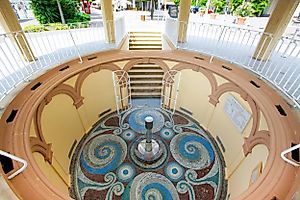
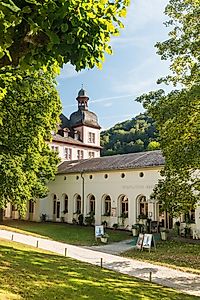
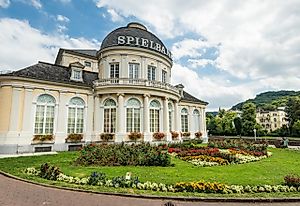
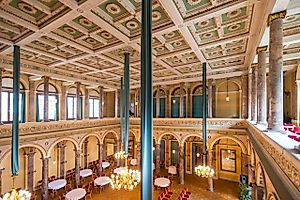
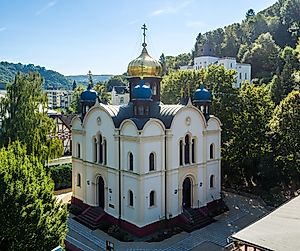
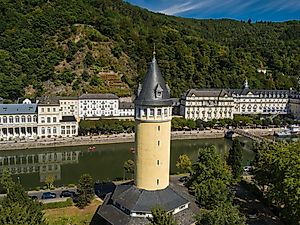
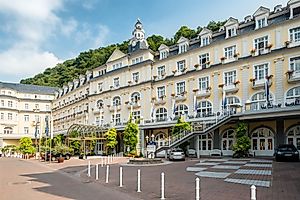
The historic spa district of Bad Ems tells of a time when the town was one of Europe's most important spa towns. Magnificent buildings, the Brunnenhalle pump room, the Kursaal building, the Baroque bathing palace and the promenade along the Lahn still shape the townscape today. At every turn, you can see why Bad Ems is part of the UNESCO World Heritage Site “Great Spa Towns of Europe”.

On the edge of the Roman Empire
Around 2,000 years ago, one of Europe's most important borders ran through here. The Upper German-Raetian Limes marked the outer frontier of the Roman Empire and is now a UNESCO World Heritage Site. Along the former border line, you can still discover watchtowers, forts and countless traces of the Romans: history you can touch, right in the landscape of the Nassau Nature Park.

Where castles, Rhine Romanticism and World Heritage meet
Just a few kilometres from the Bad Ems-Nassau region, the UNESCO World Heritage Site Upper Middle Rhine Valley begins. Between Koblenz and Bingen, castles, palaces, vineyards and historic towns follow one after another, creating one of Europe's best-known cultural landscapes. For centuries, this unique region has inspired travellers, artists and poets alike.
The must-sees in the World Heritage Site
These are the sights you shouldn't miss in the historic spa district.
11 entries

You might also like
 Photo: Dominik Ketz / RPT
 Photo: Dominik Ketz / TBEN
Good to know
Planning a stay or want to find out more about the region? Here you'll find answers to frequently asked questions about the Bad Ems-Nassau region and the Lahn Valley.
Why is Bad Ems a UNESCO World Heritage Site?
On 24 July 2021, Bad Ems was added to the UNESCO World Heritage List as part of the “Great Spa Towns of Europe”. The award recognises the outstanding importance of the historic spa town for European spa culture. With its thermal springs, impressive architecture and unique spa tradition, Bad Ems is one of Europe's most important historic spa towns.
What are the “Great Spa Towns of Europe”?
The “Great Spa Towns of Europe” are a group of eleven traditional spa towns in seven European countries. Together, they represent the heyday of European spa culture from the 18th to the early 20th century. Alongside Bad Ems, they include Karlovy Vary (Czech Republic), Bath (England), Spa (Belgium) and Vichy (France), all part of the UNESCO World Heritage.
Which sights are part of the UNESCO World Heritage Site in Bad Ems?
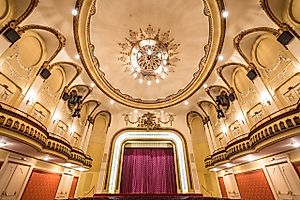
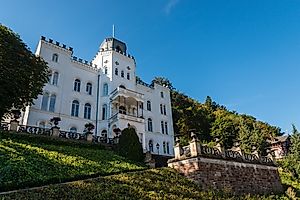
The most important sights include the Marble Hall (Marmorsaal), the Kurtheater, the Brunnenhalle pump room with its healing springs, the Baroque bathing palace, the spa gardens, the Russian Orthodox Church, the Quellenturm spring tower and the artists' house Schloss Balmoral. They reflect the history of the spa town and its importance as an international spa and holiday resort.
What makes Bad Ems so special as a historic spa town?
Bad Ems is regarded as a prime example of a European spa town. The historic thermal springs, the magnificent architecture, the direct link between the spa district and the surrounding landscape, and the long tradition of health and bathing culture make the town unique. Bad Ems was also the setting for important political events and a meeting place for European high nobility as well as numerous artists and musicians.
Can I explore the UNESCO World Heritage Site in Bad Ems on my own?
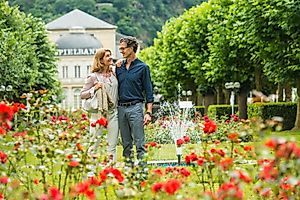
Yes. The historic spa district is perfect for exploring on foot. Along the promenade, through the spa gardens and past the most important sights, you'll experience the history of European spa culture up close. Guided tours and information services also offer fascinating insights into the history and special features of the UNESCO World Heritage Site.
Which UNESCO World Heritage Sites are there in the Bad Ems-Nassau region?
The region includes the UNESCO World Heritage Site “Great Spa Towns of Europe” in Bad Ems, the Upper German-Raetian Limes and the nearby UNESCO World Heritage Site Upper Middle Rhine Valley. This makes the region one of the most history-rich cultural landscapes in Germany.
What is the Upper German-Raetian Limes?
The Upper German-Raetian Limes was the former outer frontier of the Roman Empire. At around 550 kilometres long, it is Germany's largest archaeological monument and has been a UNESCO World Heritage Site since 2005. Parts of it run directly through the Bad Ems-Nassau region.
Is the region worth visiting for culture and history lovers?
Yes. The combination of UNESCO World Heritage, Roman history, European spa culture, castle landscapes and important historical figures makes the region one of the most exciting destinations in Rhineland-Palatinate for anyone interested in culture and history.
