Historic lithograph: the spa promenade on the Lahn in Bad Ems with the Kurhaus and the Bäderlei rock in the 19th century

Where Europe reinvented the spa cure

Header image: © Stadtarchiv Bad Ems

Amid magnificent buildings, historic healing springs and the Lahn, you'll experience a spa district that still keeps the splendour of an extraordinary era alive.

The heart of the UNESCO World Heritage Site.

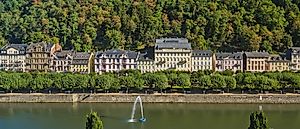
The historic spa district of Bad Ems is one of the most important spa complexes in Europe and, since 2021, part of the UNESCO World Heritage Site “Great Spa Towns of Europe”. Over the centuries a unique spa culture developed here that drew people from all over Europe, including emperors, kings, artists and statesmen. The exceptionally well-preserved architecture, the historic healing springs and the direct link between the spa district and the surrounding spa landscape make Bad Ems a prime example of European spa history to this day. As you stroll along the Lahn, you'll come across impressive buildings, elegant promenades and places where history can still be felt.

The Kursaal building in Bad Ems on the Lahn
Photo: Dominik Ketz/TBEN

The most important spa towns in Europe

On 24 July 2021, UNESCO decided to recognise Bad Ems as part of the World Heritage Site “Great Spa Towns of Europe”. This gave the spa town on the Lahn the highest international distinction a cultural site can receive. It certifies Bad Ems as having an outstanding cultural heritage whose preservation is in the interest of all humanity.

The recognition as a World Heritage Site came as part of the “Great Spa Towns of Europe”. Bad Ems received this distinction together with ten other of Europe's most important spa towns, including Karlovy Vary (Czech Republic), Vichy (France), Spa (Belgium) and Bath (England). Here you can experience at every turn how people once took the waters and spent their holidays in Europe.

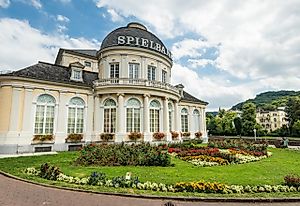
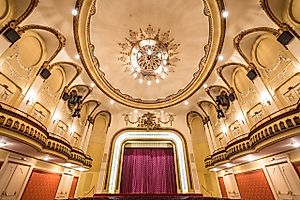
The historic Kurtheater in Bad Ems
Photo: Dominik Ketz / TBEN

A spa town of European standing

Thanks to its compactness, its location, its facilities and its social and political history, Bad Ems is a model of the European bathing tradition. The spa town was the setting for important political events and decisions, a pioneer in gaming, and deeply connected with musical heritage. The thermal springs lie close together, and the spa landscape, with its challenging therapeutic walking trails and high rocky viewpoints, joins directly onto the spa district. Bottling Bad Ems mineral water also has a long tradition, as does the use of its salts in the famous Emser Pastilles.

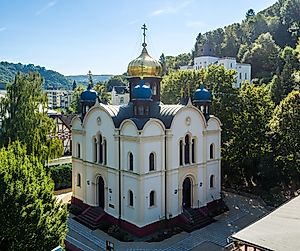
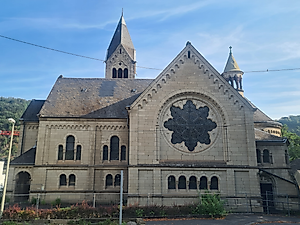
The Russian Orthodox Church in Bad Ems with its golden domes
Photo: Dominik Ketz / TBEN

The distinctive architecture of the spa towns

The Great Spa Towns of Europe are eleven famous spa towns, named World Heritage Sites by UNESCO in July 2021, that represent the heyday of the European spa phenomenon, which is rooted in antiquity and has a global influence. These great spa towns bring together the most modern, dynamic and international spa resorts that grew up around natural mineral springs. They created an urban type with a specific form, function and remarkable architecture that has no earlier parallel, all set within a unique therapeutic landscape devoted to the “cure”, relaxation and enjoyment. These great spa towns were pioneers of emerging modern tourism.

The loveliest places in the historic spa district

Every building tells its own story. From the magnificent Kursaal to the Brunnenhalle pump room, from historic healing springs to impressive architecture, these places shape the UNESCO World Heritage Site and make the spa district one of the loveliest parts of town along the Lahn.

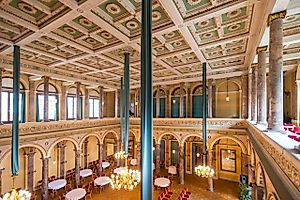
Marble Hall (Marmorsaal) in the Kursaal building in Bad Ems with columns, coffered ceiling and chandeliersPhoto: Dominik Ketz/TBEN
Kursaal building & Marble Hall (Marmorsaal)

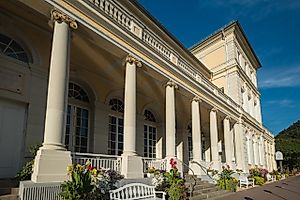
Right on the Lahn, the Kursaal building with its magnificent Marble Hall (Marmorsaal) forms the architectural centre of the historic spa district. To this day it hosts concerts, cultural events and special occasions.

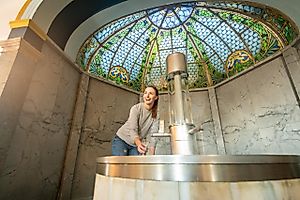
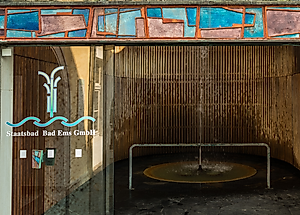
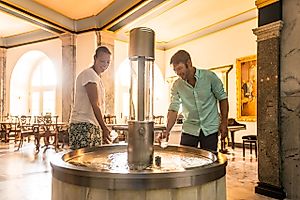
Two guests at the Kränchen spring under the colourful glass dome in the Brunnenhalle pump room in Bad EmsPhoto: Dominik Ketz/TBEN
Brunnenhalle pump room & healing springs

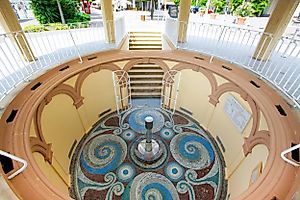
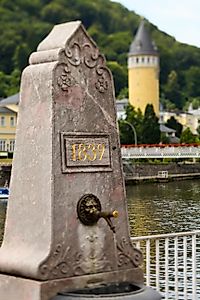
The famous Ems healing springs have been bubbling up here for centuries. The historic Brunnenhalle pump room combines impressive architecture with the long tradition of Bad Ems spa and health culture.

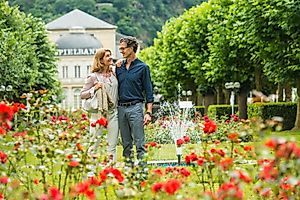
Couple strolling through the blossoming spa gardens in front of the casino in Bad EmsPhoto: Dominik Ketz/TBEN
Spa gardens & promenade

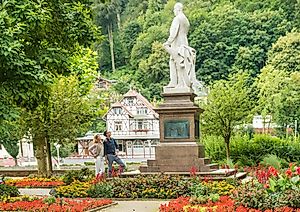
Between old tree-lined avenues, well-kept green spaces and the Lahn, the spa gardens invite you to linger. As early as the 18th century, spa guests used this place for their walks and drinking cures, a tradition you can still feel today.

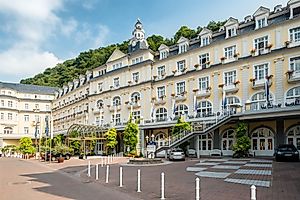
Baroque bathing palace (Häcker’s Grand Hotel) in Bad Ems with forecourt and sweeping staircasePhoto: Dominik Ketz/TBEN
Baroque bathing palace

The Baroque bathing palace is one of the best-known landmarks of Bad Ems. Right on the banks of the Lahn, it recalls the beginnings of spa history and still shapes the historic townscape today.

Discover the spa district for yourself

Whether historic buildings, healing springs, parks or cultural sights, our interactive map leads you to the most important places of the UNESCO World Heritage Site in the Bad Ems spa district and makes your tour through history especially easy and inspiring.

32 entries

You might also like

Good to know

Planning a stay or want to find out more about the region? Here you'll find answers to frequently asked questions about the Bad Ems-Nassau region and the Lahn Valley.

Still have questions?

We're happy to help you plan your trip to the Lahn Valley.

Contact
Why is the spa district of Bad Ems a UNESCO World Heritage Site?

The historic spa district is part of the UNESCO World Heritage Site “Great Spa Towns of Europe”. The distinction honours the exceptional importance of Bad Ems for European spa and bathing culture as well as its superbly preserved historic architecture.

Which sights belong to the historic spa district?

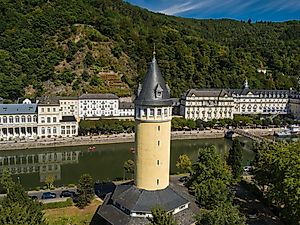
The most important sights include the Kursaal building with the Marble Hall (Marmorsaal), the Brunnenhalle pump room, the Baroque bathing palace, the spa gardens, the Russian Orthodox Church, the Kurtheater and the Quellenturm spring tower.

What makes the spa district of Bad Ems so special?

The spa district combines historic healing springs, magnificent architecture and an extraordinary spa history. For centuries Bad Ems was a meeting place for emperors, artists and personalities from all over Europe, and today it is regarded as a prime example of a historic spa town.

Can you explore the spa district on foot?

Yes. The most important sights are close together and are easy to discover on a stroll along the Lahn and through the spa gardens. This way, visitors experience the history of the UNESCO World Heritage Site first-hand.

Which famous people have visited the spa district?

The best-known guests included Emperor Wilhelm I, Tsar Alexander II, Richard Wagner, Jacques Offenbach and Fyodor Dostoevsky. They all helped to make Bad Ems known as a world-famous spa.

Is the historic spa district still worth a visit today?

Absolutely. The spa district combines history, culture, architecture and relaxation in a unique way. Whether as a stroll, as part of a guided city tour or combined with a visit to the Emser Therme thermal spa, the historic centre is one of the loveliest places in Bad Ems.

Sunset over Dausenau on the Lahn

And tomorrow we'll stay a little longer

The Bad Ems-Nassau region stays with you. Between river and hills, a feeling arises that you don't have to hold on to in order to take it with you.

Find accommodation now

Photo: © Dominik Ketz / TBEN; KI optimiert